
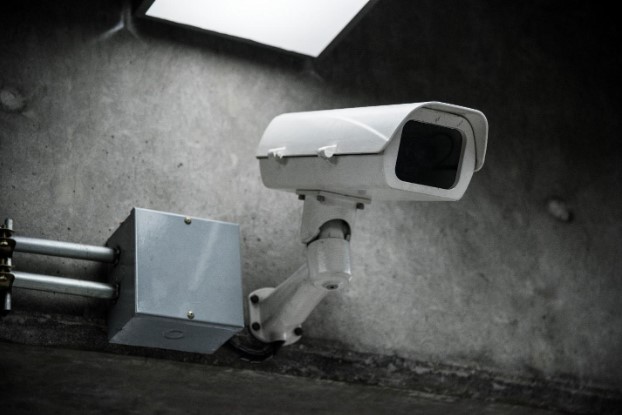


Just think of the convenience of being able to watch your home and office without being physically there, just by watching through the cameras. Modern technology has provided us with many things, and one of them is surveillance cameras. The best thing about these cameras is that you don’t have to wait for the recording; you can just watch it live from anywhere and on any gadget.
Controlling crime has become easy with these cameras. In addition to security, these cameras have given peace of mind. These cameras enhance overall safety and security and improve emergency response in homes, businesses, and public spaces. In this article, we will understand how these cameras work and the different types of surveillance cameras.
What are Surveillance Cameras
Surveillance cameras are devices used to monitor and record activities in a specific area, capturing video for security or evidence. It often works with software, storage, and networks for continuous viewing or recording for viewing later. These cameras are usually used in public spaces, commercial buildings, and industrial sites to deter crime or for security.
Unlike simpler security cameras, surveillance cameras are integrated for broader monitoring, feature advanced analytics, and are designed for longer recording periods. Advanced features like remote access and video analytics further boost their effectiveness in managing security and even optimizing city functions like traffic flow.
How Surveillance Cameras Work
Surveillance cameras work by using a lens to focus light onto an image sensor that converts light into electrical signals, which are then processed, compressed, and transmitted to a storage device or the cloud, allowing for real-time monitoring, recording, and playback, often with smart features like motion detection.
Components of a Camera
Image Sensor: It captures light and turns it into pixels and a picture.
Lens: It focuses the image and has an auto-adjusting light feature.
Infrared LEDs: These provide night vision by illuminating the scene with infrared light.
Connectivity: If wired, it offers reliability, and wireless (Wi-Fi) offers flexibility.
Storage System: It is used to save recordings either on an SD card or a hard drive.
Types of Security Cameras
Surveillance cameras are categorized by design, connectivity, functionality, and environment.
1. By Design
Dome Cameras: These have a wide-angle lens inside a dome-shaped device that protects from harsh weather conditions.
Bullet Cameras: These are cylindrical and highly visible cameras for deterring crime and are for long-range monitoring.
Turret Cameras: These are a hybrid of dome & bullet, no fixed glass dome, easier to aim, popular for flexible placement.
Fisheye Cameras: These are wide-angle lenses for panoramic views, covering large areas with fewer cameras.
2. By Connectivity
Wired Cameras: These are more reliable, stable connections, often using Ethernet or coaxial cables.
Wireless Cameras: They connect via Wi-Fi, offering easy installation but relying on strong network signals.
IP Cameras: These are digital cameras sending data over networks, offering high-quality images.
3. By Functionality
Night Vision Cameras: They use infrared LEDs to capture clear images in low light or complete darkness.
Varifocal Cameras: They have the feature of adjustable zoom lenses for flexible focal length and field of view.
4. By Environment
Indoor Cameras: These are small and don’t need any specific weatherproof casing.
Outdoor Cameras: These require hard-wearing casings to protect against weather conditions and acts of vandalism.